
ChemTech Thermochromic & Photochromic Pigments
Pigments that change colour reversibly — with temperature or with UV light. Pick a shade from the ChemTech colour card and see how it behaves over different substrates and in both states.
Colour that responds to temperature
Thermochromic pigments reversibly change colour in response to temperature, switching between a coloured and a colourless (or differently coloured) state at a defined transition point. They are used in paints, coatings, plastics, textiles and packaging for temperature indicators, security printing, novelty products and smart colour-changing effects.
- 15 shades on the ChemTech colour card, from Red to Black
- Reversible: coloured below, colourless above the transition temperature
- Transition temperatures and dosage guidance in the TDS — available on request
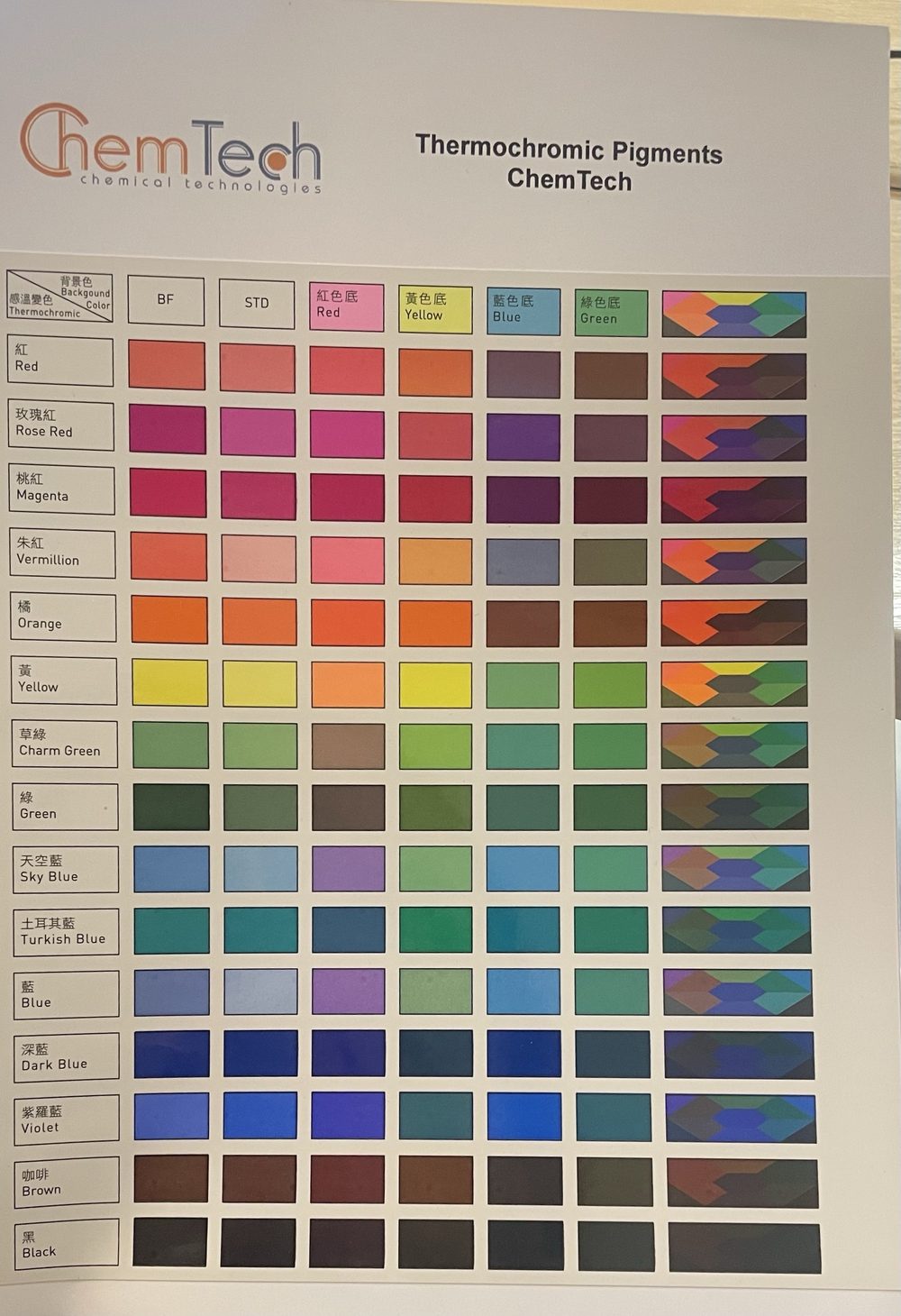
Thermochromic configurator
- White #FFFFFF
- Black #1F1F1F
- Grey #9A9B9E
- Beige #E8DCC5
- Red #C8362E
- Yellow #F2E34A
- Blue #2F5FA8
- Green #4E9A51
Screen simulation for orientation only — the physical colour card and a sample in your system are the reference. Each substrate shows the pigment film as a semi-transparent layer at the chosen loading.
Colour that appears in sunlight
Photochromic pigments reversibly change colour when exposed to UV light (including sunlight), returning to their original state indoors or in the dark. They are applied in decorative coatings, plastics, textiles and printing to create sun-activated colour-shifting effects, UV indicators and anti-counterfeiting features.
- 16 shades on the ChemTech colour card, #31 New Magenta to #91 Dark Charcoal Grey
- Near-colourless indoors, full colour under UV or sunlight
- Activation and fade-back data in the TDS — available on request
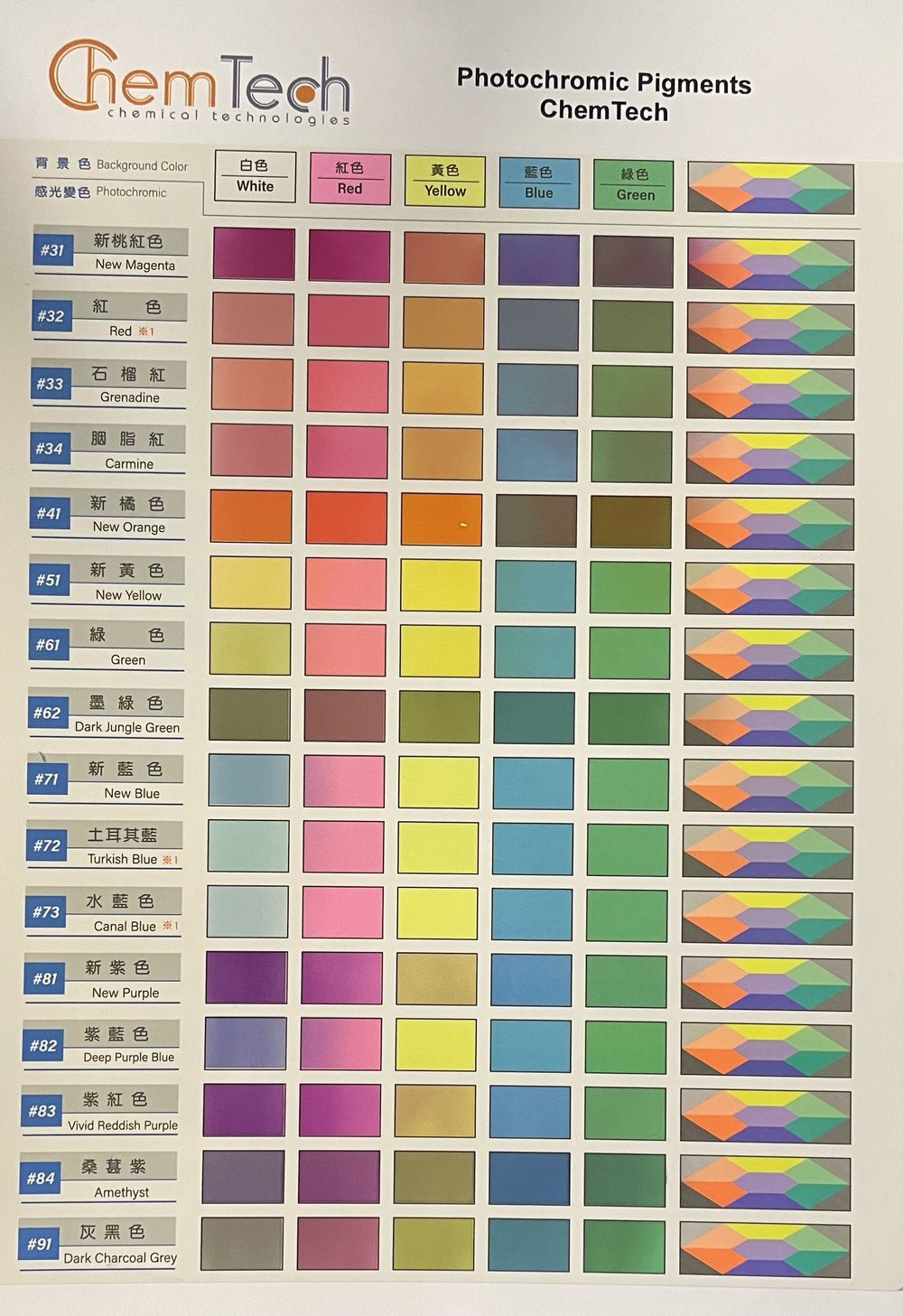
Photochromic configurator
- White #FFFFFF
- Black #1F1F1F
- Grey #9A9B9E
- Beige #E8DCC5
- Red #C8362E
- Yellow #F2E34A
- Blue #2F5FA8
- Green #4E9A51
Screen simulation for orientation only — the physical colour card and a sample in your system are the reference. Each substrate shows the pigment film as a semi-transparent layer at the chosen loading.
Working with colour-changing pigments
The effect depends on the pigment loading, the substrate colour and the binder system. We recommend a screening trial in your own formulation: request samples of the shades you selected above, and a Technical Sales Manager will advise on dosage, processing temperatures and compatibility. Technical and safety data are supplied with the TDS and SDS of each grade.
Test a colour-changing effect in your system
Samples of thermochromic and photochromic pigments for laboratory and industrial trials, with TDS and SDS.